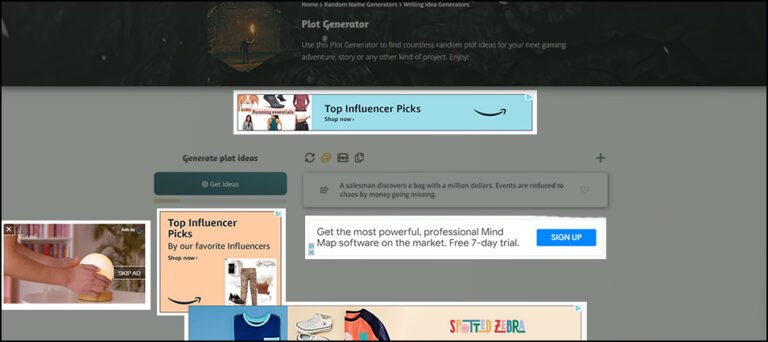
Ever stared at a blank screen, a blinking cursor mocking your ambition to write the next great novel? You’re not alone. Every writer, from seasoned pros to aspiring wordsmiths, eventually encounters the dreaded creative block. That’s where the magic of book plot generators comes in – powerful AI-driven tools that don't just kickstart your imagination but provide structured frameworks, helping you overcome narrative paralysis and discover fresh story angles. They're not here to replace your genius, but to be your most dedicated brainstorming partner, helping you lay a rock-solid foundation for your new literary adventure.
At a Glance: What You'll Learn About Book Plot Generators
- What they are: AI tools transforming creative input into coherent story outlines.
- How they work: You provide key details like genre, setting, and character; the generator crafts the narrative core.
- Diverse "Types": From genre-specific to advanced AI, catering to different creative needs.
- Key benefits: Overcome writer's block, save time, explore new genres, maintain plot consistency, and boost brainstorming.
- Best practices: Use as inspiration, customize thoroughly, and remember the final execution is always yours.
- Why they matter: Nearly half of writers now integrate AI tools into their process for greater efficiency and creative output.
What Exactly is a Book Plot Generator?
At its heart, a book plot generator is an AI-powered engine designed to take your raw creative sparks and transform them into a cohesive story outline with clear narrative direction. Leveraging advanced natural language processing (NLP) and sophisticated algorithms, these tools function as a creative co-pilot. They don't write the novel for you, but they meticulously build the foundational skeleton, allowing you to focus your energy on the intricate details, character depth, and beautiful prose that make a story truly sing.
Think of it this way: instead of staring at a vast, empty canvas, a plot generator hands you a preliminary sketch – complete with suggested contours for characters, potential conflicts, and even a rough sense of pacing. This initial framework includes everything from a comprehensive story outline (beginning, middle, end, key story beats) to character backstories, conflict scenarios, potential plot twists, vivid setting descriptions, and even ideas for subplots. It’s about building a sturdy scaffolding so you can construct your narrative masterpiece with confidence.
Exploring the Spectrum: Types of Book Plot Generators
While the term "book plot generator" often conjures images of one universal tool, the reality is far more nuanced. These generators come in various forms, each designed to cater to different stages of your creative process or specific narrative needs. Understanding these distinctions helps you choose the right tool for the job.
1. Genre-Specific Generators: Tailoring Your Tale
Many generators specialize in particular genres, understanding their unique tropes, common character archetypes, and narrative structures.
- How they work: You specify a genre – Fantasy, Sci-Fi, Romance, Thriller, Mystery, etc. The generator then applies its knowledge of that genre's conventions to craft a plot idea.
- Best for: Writers who know their genre but need fresh ideas within its established framework. For example, a fantasy generator might suggest quests, magical artifacts, or ancient prophecies, while a romance generator focuses on meet-cutes, emotional stakes, and relationship dynamics.
- Example: Imagine inputting "Fantasy" and getting a prompt about an exiled prince seeking a mythical beast in a forgotten realm to reclaim his throne.
2. Character-Driven Generators: From Persona to Plot
These tools prioritize your protagonist, building a story around their unique traits, motivations, and internal struggles.
- How they work: You provide details about your main character – their personality, goals, flaws, and perhaps a secret. The generator then constructs a plot that challenges this character, forcing them to confront their weaknesses or leverage their strengths.
- Best for: Writers who develop compelling characters first and then seek a plot worthy of them. It helps ensure your character's journey feels organic and impactful.
- Example: You describe a cynical alchemist with a hidden heart of gold, searching for a lost spellbook. The generator might then suggest a plot where retrieving the book forces him to trust others, challenging his cynicism.
3. Conflict-Focused Generators: The Engine of Story
Conflict is the heartbeat of any compelling story. These generators start by defining the core struggle, problem, or antagonist, then build the plot outwards.
- How they work: You outline the main challenge or antagonist your character faces. This could be a natural disaster, a powerful villain, a societal injustice, or an internal dilemma. The generator then designs a plot arc focused on overcoming this central obstacle.
- Best for: Writers who have a strong sense of the "what if" – the core problem – and need help structuring the journey to resolve it.
- Example: You state the core problem is "An ancient, powerful dragon guards the lost spellbook." The generator then outlines how your alchemist protagonist might prepare for, confront, and defeat (or outwit) this dragon.
4. Structural Generators: Blueprinting the Arc
Rather than specific content, these generators focus on established narrative structures like the three-act structure, the hero's journey, or even more complex frameworks.
- How they work: You input key story elements, and the generator maps them onto a chosen narrative arc, ensuring your plot hits all the necessary beats – inciting incident, rising action, climax, falling action, resolution.
- Best for: Writers who want to ensure their story has a well-paced, proven structure, especially when adapting or refining an existing idea.
- Example: The generator might guide you to place the moment the alchemist learns of his village's plague as the "inciting incident," and his first encounter with the dragon as the "point of no return."
5. Prompt-Based / Idea-Sparkers: Quick Creative Jumps
These are often simpler tools, designed to provide a quick burst of inspiration with minimal input.
- How they work: You might click a button or enter one or two keywords, and the generator spits out a single sentence or a short paragraph idea.
- Best for: Overcoming momentary block, generating random ideas for short stories, or just getting a quick mental jog. They're less about comprehensive plots and more about initial sparks.
- Example: A simple prompt might be "wizard, lost, city" and the generator returns: "A young wizard, exiled and disoriented, stumbles upon a forgotten city built within a giant, ancient tree."
6. Advanced AI-Powered Generators: The Comprehensive Co-Writer
This category represents the most sophisticated tools, often integrating elements from all the above types. These are the powerful engines that leverage large language models to provide incredibly detailed and nuanced plot outlines. The ground truth research primarily describes this type of generator.
- How they work: You provide several key details across various categories – genre, setting, main character, central challenge, core problem, and even the overarching theme or message. The AI then processes these inputs using advanced natural language models and algorithms to create a unique, tailored, and comprehensive plot.
- Best for: Writers seeking a robust, detailed framework that can serve as the backbone of an entire novel. These tools help develop multi-dimensional characters, analyze plot structure, fine-tune pacing, and create unique conflicts and twists.
- Example: This is the category where tools like Our book plot generator excel, offering a holistic approach to story construction.
How Advanced AI Book Plot Generators Work: Your Creative Partner in Action
Using an advanced book plot generator is an interactive, collaborative process. You provide the essence of your vision, and the AI helps you flesh it out. Here’s a typical workflow:
- Choose Your Story Type/Genre: Start broad. Are you writing fiction, sci-fi, fantasy, or a historical narrative?
- Example: Fantasy.
- Describe the Setting & Time: Where and when do events unfold? Give it flavor.
- Example: A sprawling metropolis built inside a colossal tree, centuries after a global magical cataclysm.
- Introduce Your Main Character: Who is at the heart of your story? A brief description is enough.
- Example: A cynical alchemist on a quest to find a lost spellbook.
- Define the Main Challenge/Blocking Character: What stands in their way? This is your core conflict.
- Example: An ancient, powerful dragon guards the spellbook.
- State the Core Problem: What must your character achieve, and why does it matter?
- Example: The alchemist must retrieve the spellbook to save his dying village from a spreading plague.
- Share Your Central Idea/Message: What deeper meaning do you want your story to convey?
- Example: The enduring power of hope against overwhelming odds.
Once you've fed these details into the generator, it processes them, generating a unique and detailed plot idea tailored specifically to your input. You might also find advanced options to adjust plot complexity, story length, or narrative structure before you hit "generate." The beauty is in the iterative process: review, modify, and regenerate until you find a plot that resonates with your vision.
Unpacking the Power: Key Capabilities and Features
Beyond just spitting out ideas, modern book plot generators come equipped with an impressive array of features designed to elevate your writing process:
- Technical Definition: They are, fundamentally, AI-powered tools that ingest your creative input and transform it into a coherent plot outline with a clear narrative direction, using sophisticated natural language models and algorithms.
- Comprehensive Output: Expect a full story outline (beginning, middle, end, and specific story beats), fleshed-out character backgrounds, detailed conflict scenarios, surprising plot twists, evocative setting descriptions, and even ideas for compelling subplots.
- Deeper Story Development: These tools don't just generate; they assist in developing multidimensional characters, analyzing plot structure and pacing, and crafting truly unique conflicts and twists that feel earned.
The Undeniable Benefits of Using a Book Plot Generator
Why are so many writers – nearly half, according to recent trends – embracing AI tools in their writing process? The advantages are clear and compelling:
Conquer Creative Block with Confidence
Every writer hits a wall. A plot generator acts as a powerful catalyst, providing that initial push and a structured framework to get your story moving. It transforms the overwhelming blank page into a manageable series of steps.
Reclaim Your Time
Crafting a robust story structure from scratch can be incredibly time-consuming. By handling the heavy lifting of plot architecture, generators free you up to focus on what you love most: developing rich characters, crafting vivid prose, and exploring the nuances of your story's world.
Explore New Narrative Territories
Ever wanted to write a sci-fi epic but felt daunted by the genre's conventions? Plot generators can provide genre-appropriate story structures, allowing you to confidently experiment with new creative avenues and styles you might not have tackled otherwise.
Maintain Plot Consistency
A sprawling narrative can easily lose its way. A good plot generator helps ensure your story events follow a natural progression, maintaining consistency with your established world and characters, preventing plot holes before they appear.
A Relentless Brainstorming Partner
Sometimes you need options. From the same core elements, a generator can produce multiple plot variations, offering you a wealth of ideas to choose from and refine. It's like having a dedicated writing team at your fingertips, constantly churning out fresh angles.
Elevate Your Creative Control
This isn't about giving up control; it's about amplifying it. A plot generator acts as a supportive framework, enhancing your own creativity rather than replacing it. It provides ideas you can twist, mold, and make entirely your own, expanding your creative horizons.
Mastering the Tool: Tips for Effective Use
To truly harness the power of book plot generators, approach them with an informed strategy.
- See it as Inspiration, Not a Finished Product: The generated plot is a starting point, a blueprint. Your unique voice, style, and creative additions are what transform it into a living story. Think of it as a creative prompt on steroids.
- Customize, Customize, Customize: Never feel beholden to the initial output. Adjust the generated plot to fit your unique writing style. Add intriguing subplots, deepen character backstories, or tweak conflicts to align with your vision. The best results come from a blend of AI suggestion and human ingenuity.
- Yes, You Can Publish: A plot generated by an AI tool is a creative prompt. The final execution – the writing, the prose, the detailed character arcs, the unique world-building – is entirely yours. Therefore, any work you create from a generated plot is your original creation and can absolutely be published.
- Don't Settle – Regenerate! If the initial plot isn't quite right, don't give up. Adjust your input parameters, refine your core ideas, and hit that regenerate button again. Experiment with different inputs to unlock new possibilities. The iterative nature of these tools is their strength.
Common Questions and Misconceptions
Let's address some of the questions writers often have about using plot generators:
"Is using a plot generator cheating?"
Absolutely not. Think of it as using a powerful outlining tool, a brainstorming partner, or even a writing prompt. Architects use CAD software, musicians use synthesizers, and writers can certainly use AI to streamline their process and spark new ideas. Your creativity, effort, and unique voice are still paramount.
"Will AI take over my creativity?"
Quite the opposite. These tools are designed to enhance your creativity by removing obstacles like writer's block and providing a structured starting point. They free up mental energy for the truly creative aspects of writing – character voice, evocative descriptions, emotional depth, and thematic resonance.
"Are all book plot generators the same?"
As we've explored, there's a wide spectrum. From simple prompt generators to sophisticated AI-powered tools that create detailed outlines, each "type" serves a different purpose. The key is to find the one that best suits your current needs and workflow.
Your Next Chapter Awaits
The world of writing is constantly evolving, and book plot generators represent a significant leap forward in empowering authors. They offer a tangible solution to common writing challenges, transforming daunting tasks into exciting possibilities. By understanding the different types available and how to best utilize them, you gain a powerful ally in your creative journey.
So, the next time you find yourself staring at that intimidating blank page, remember: you have a sophisticated, tirelessly creative partner waiting to help you outline your next masterpiece. Embrace the tools, unleash your imagination, and write the story only you can tell.