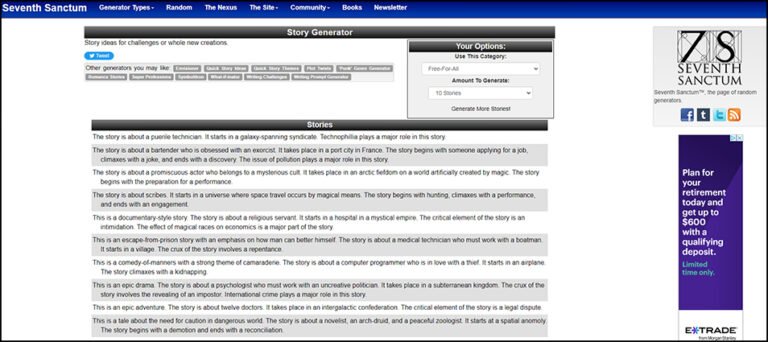
Every writer knows the feeling: you’re staring at a blank page, the cursor blinks mockingly, and your brilliant idea for a sprawling epic fantasy or a nail-biting psychological thriller has somehow… vanished. You know the vibe of your story, maybe even a character, but a cohesive, compelling plot? That’s another beast entirely. This is where book plot generators for specific genres enter the scene, not as a replacement for your creative genius, but as an indispensable co-pilot to ignite your imagination and accelerate your writing process.
These aren't just random idea machines; they are sophisticated tools designed to understand the nuances of particular genres, helping you craft story outlines that resonate with readers whether you're building worlds of dragons or dissecting a perplexing murder.
At a Glance: Your Storytelling Power-Up
- Overcome Writer's Block: Quickly generate fresh ideas when inspiration stalls.
- Genre-Specific Tailoring: Get plots aligned with fantasy, sci-fi, romance, mystery, horror, and more.
- Time-Saving: Skip lengthy brainstorming sessions and dive straight into outlining.
- Customizable: Fine-tune plots with specific characters, settings, themes, and twists.
- Free & Accessible: Many tools, like Creative Aspirant's generator, are available online without downloads or sign-ups.
- Unique & Usable: Generated plots are original and can serve as inspiration for published works.
The Blank Page Problem: Why Genre-Specific Plot Generators are Your Secret Weapon
The journey from a vague concept to a fully realized novel is often fraught with detours and dead ends. You might have a fantastic protagonist, an intriguing setting, or a burning theme, but connecting these elements into a coherent, engaging narrative arc is a monumental task. This challenge is magnified when you’re trying to adhere to the conventions and expectations of a specific genre. Fantasy requires quests and world-building, mystery demands clues and red herrings, and romance needs emotional arcs and satisfying resolutions.
Generic plot generators can offer a starting point, but they often lack the genre-specific scaffolding that truly makes a story feel authentic and compelling to its target audience. Imagine a fantasy plot that skips the magic system or a horror plot without a creeping sense of dread. It just doesn't quite hit the mark.
This is precisely where genre-specific book plot generators shine. They act as intelligent brainstorming partners, understanding the narrative DNA of different genres. By providing a framework tailored to your chosen style, they help you bypass the arduous initial stages of plot development, saving you precious hours and reigniting your creative spark. Instead of aimlessly wandering, you get a focused, relevant starting point.
What Exactly Are Book Plot Generators for Specific Genres?
At their core, book plot generators for specific genres are algorithmic tools designed to produce original, structured story outlines based on your selected parameters. Unlike a random word generator, these tools leverage an understanding of common narrative tropes, character archetypes, and structural patterns prevalent within different genres.
Think of it as having a miniature story architect in your browser. You don't just ask for "a story"; you ask for "a fantasy story about a reluctant hero," or "a sci-fi plot involving a stranded crew," or even "a mystery with a classic detective and a locked-room puzzle." The generator then synthesizes these inputs, drawing from a vast internal library of plot elements to construct a unique outline. The result is a complete, ready-to-use story blueprint, delivered in seconds, that serves as a powerful foundation upon which to create your book plot and build your narrative.
These tools allow for significant customization. Beyond selecting your genre, you can often specify:
- Main Character Types: Hero, anti-hero, detective, chosen one, scientist, star-crossed lover.
- Settings: Futuristic city, ancient kingdom, isolated mansion, interstellar ship.
- Themes: Redemption, revenge, identity, survival, sacrifice, forbidden love.
- Twists: Unexpected betrayals, hidden powers, shocking revelations.
This level of control ensures that while the generator provides the scaffolding, your unique vision can still shape the story from its inception.
Unlocking Creativity: The Benefits Beyond Just "A Plot"
While the immediate benefit of a plot generator is, well, generating a plot, their utility extends far beyond mere convenience. These tools offer a multi-faceted boost to your creative process:
- Inspiring Novelty and Fresh Perspectives: Sometimes, the best way to break free from creative ruts is to introduce an element of surprise. A generator can suggest plot twists, character motivations, or settings you might never have considered, pushing your story in exciting, unexpected directions. It’s like having an impartial brainstorming partner who isn't afraid to suggest the wild card.
- Efficient Time Management: Brainstorming can be a black hole for time. Hours can evaporate trying to find that perfect inciting incident or a compelling antagonist. By providing a comprehensive outline in seconds, plot generators allow you to bypass this often-frustrating phase, letting you dedicate more time to the actual writing, character development, and world-building. This efficiency can truly streamline your writing process and make hitting deadlines far more manageable.
- A Learning Tool for Genre Conventions: For aspiring writers, or those venturing into a new genre, these generators can be invaluable. By observing the structure and typical elements of the generated plots, you can gain a deeper understanding story structure and the common tropes and beats that define a genre. It’s a practical, hands-on way to learn what works within specific narrative frameworks.
- Customization and Personalization: The true power lies in the ability to customize. You're not stuck with the first generated plot. If the initial output isn't quite right, you can adjust your inputs—change a character trait, add a new theme, or demand a different twist—and generate again. This iterative process allows you to sculpt the outline until it perfectly aligns with your vision.
A Deep Dive into Genre-Specific Plotting
Different genres operate on distinct rules and reader expectations. A good plot generator understands this, offering elements specifically tailored to each. Let's explore how these tools tackle some popular genres:
Fantasy: Crafting Quests and Realms
Fantasy plots often revolve around epic journeys, magical systems, ancient prophecies, and the struggle between good and evil. A generator for fantasy might weave in:
- Reluctant Heroes: An ordinary stable hand discovers a hidden magical lineage.
- Ancient Evils: A dormant dark lord begins to stir, threatening a peaceful kingdom.
- Magical Artifacts: A powerful weapon or relic must be found before it falls into the wrong hands.
- Epic Quests: A diverse fellowship must travel across perilous lands to achieve a critical objective.
- Intricate World-Building: Hints at unique cultures, fantastical creatures, and intricate political landscapes.
The generator can provide a skeletal quest narrative, outlining the journey, the obstacles, and the ultimate confrontation, leaving you to flesh out the intricate details of your world.
Science Fiction: Exploring the Future and Beyond
Sci-fi plots often grapple with technological advancements, future societies, alien encounters, and existential questions. A generator here might suggest:
- Dystopian Futures: A lone rebel fights against an oppressive, technologically advanced regime.
- Space Exploration: A crew discovers an enigmatic alien artifact or a new habitable planet.
- AI and Robotics: Sentient AI challenges humanity's dominance or grapples with its own identity.
- Time Travel Paradoxes: Characters alter history with unforeseen consequences.
- Post-Apocalyptic Survival: Survivors navigate a ruined world, battling environmental threats and desperate factions.
It provides the scaffolding for speculative scenarios, allowing you to focus on the scientific concepts and philosophical implications.
Romance: Weaving Threads of Connection
Romance plots are all about relationships, emotional journeys, and the pursuit of love. A generator will focus on:
- Meet-Cute Scenarios: How two characters with opposing personalities or backgrounds first encounter each other.
- Internal & External Conflicts: Obstacles like past traumas, family disapproval, career demands, or rivals that keep the lovers apart.
- Emotional Stakes: What the characters stand to lose if they don't find love.
- Character Arcs: How each character grows and changes through their relationship.
- Satisfying Resolutions: The "Happily Ever After" (HEA) or "Happy For Now" (HFN) ending, a hallmark of the genre.
A romance generator helps outline the relationship's progression, from initial sparks to the dark moment and eventual resolution, ensuring the emotional beats are in place for you to delve into character archetypes and make your protagonists truly swoon-worthy.
Mystery: Crafting the Unraveling Truth
Mystery plots are built on suspense, intrigue, and the careful revelation of clues leading to a truth. A generator for mystery might offer:
- The Crime: A baffling murder, a perplexing theft, or a sinister disappearance.
- The Detective: An amateur sleuth, a hard-boiled private eye, or a brilliant police inspector.
- Red Herrings: Misleading clues and suspects designed to throw the reader (and the detective) off track.
- Motives: A clear understanding of why the crime was committed (greed, revenge, passion).
- The Reveal: The dramatic moment when the truth, and the culprit, are exposed.
It provides the framework of the puzzle, allowing you to meticulously hide clues and build escalating tension.
Horror: Summoning Fear and Dread
Horror plots aim to evoke fear, dread, and psychological unease. A generator can help with:
- The Threat: Supernatural entity, deranged killer, psychological tormentor, environmental catastrophe.
- Isolated Settings: A remote cabin, an abandoned asylum, a desolate stretch of road.
- Vulnerable Protagonists: Characters who are relatable and therefore more susceptible to fear.
- Rising Stakes: Escalating tension and increasing danger as the threat closes in.
- Psychological Elements: Exploring themes of madness, trauma, or existential dread.
It helps you outline the sequence of scares and the slow, agonizing build of suspense necessary to genuinely terrify readers.
How to Use a Book Plot Generator: A Step-by-Step Guide
Using a genre-specific plot generator is remarkably straightforward, often requiring just a few clicks. Let's walk through the process, using Creative Aspirant's generator as our example.
Step 1: Accessing the Tool
First, you'll open the Book Plot Generator on Creative Aspirant (or your chosen platform). Most of these tools are web-based, meaning there's nothing to download or install. This accessibility makes them incredibly convenient—you can generate a plot from any device, anywhere, anytime. You won't need to sign up or create an account, making the process quick and frictionless.
Step 2: Defining Your Parameters
This is where you give the generator direction. You'll typically be presented with fields or dropdowns to select your preferences:
- Choose Your Genre: This is crucial. Select from options like Fantasy, Sci-Fi, Romance, Mystery, Horror, and potentially others.
- Identify Your Main Character: You might select from archetypes (e.g., "Reluctant Hero," "Hard-Boiled Detective," "Star-Crossed Lover") or describe a key characteristic.
- Add Optional Elements: This is where you layer on specifics. You could input a particular setting (e.g., "abandoned space station," "Victorian London"), a specific theme (e.g., "redemption," "revenge"), or a desired twist (e.g., "betrayal by a trusted friend"). The more details you provide, the more tailored your output will be. This is also where you might consider elements of mastering world-building if your genre requires it.
Step 3: Generating Your Plot
Once your selections are made, simply click the "Generate" button. The tool will process your inputs and, in a matter of seconds, present you with a unique, ready-to-use plot outline. This outline will typically include:
- An Inciting Incident: What kicks off the story.
- Rising Action: Key events and conflicts that build tension.
- Climax: The turning point or main confrontation.
- Falling Action: The aftermath of the climax.
- Resolution: How the story concludes.
Step 4: Leveraging the Output
The generated plot isn't meant to be a finished manuscript. Instead, it's a powerful source of inspiration:
- As a Starting Point: Use it as the backbone for your book, screenplay, short story, or role-playing game.
- For Customization: Take the outline and mold it. Add your unique voice, develop your characters, deepen the themes, and insert your own distinctive subplots.
- For Experimentation: Generate multiple plots within the same genre to explore different angles, or try a genre you've never written in before to spark new ideas.
Remember, the goal is to inspire, not to dictate. The generated plot is a strong foundation for your creativity to build upon.
Beyond the Outline: Making the Generated Plot Truly Yours
A plot generator is a powerful tool, but it's important to view its output as a raw gem, not a polished diamond. The plot outline is the skeleton; you, the writer, provide the flesh, blood, and soul.
Here’s how to truly make a generated plot your own:
- Infuse Your Voice: This is paramount. No two writers tell the same story, even with an identical plot. Your unique prose, descriptive style, and narrative perspective are what will set your work apart.
- Deepen Characters: The generator might give you a "reluctant hero," but why are they reluctant? What are their fears, dreams, quirks, and past traumas? Dive into their psychology, give them flaws, and make them relatable.
- Expand the World: A plot outline offers settings, but you must bring them to life with sensory details. What does your futuristic city smell like? What are the unspoken rules of your fantasy kingdom? Build a rich, immersive world around the plot.
- Add Subplots and Nuances: A basic plot is often linear. Introduce secondary characters with their own arcs, weave in romantic tensions, political intrigues, or personal revelations that add layers to the main story.
- Inject Personal Themes: Even if the generator suggests a theme, explore it through your own lens. What does "redemption" mean to you? How does "sacrifice" manifest in your characters' lives?
- Rewrite and Refine: Don't be afraid to change major plot points, swap character roles, or invent entirely new scenes. The generated plot is a suggestion, not a mandate. It's meant to kickstart your imagination, not constrain it.
This iterative process ensures that while you benefit from the generator's speed and structure, the final story is unequivocally yours, bearing the unmistakable mark of your creativity and dedication.
Who Benefits Most from These Tools?
The beauty of book plot generators for specific genres lies in their broad utility. They aren't just for struggling novelists; they offer tangible benefits to a diverse range of creative individuals:
- Authors & Novelists: Whether you're battling chronic writer's block, seeking a fresh take on a familiar genre, or need a rapid-fire outline for a challenge, these generators are an invaluable resource for generating new story ideas. They help overcome the daunting blank page and propel you into the writing phase.
- Screenwriters: For those working in film or TV, time is often of the essence. A plot generator can quickly provide a concise story outline, making it easier to pitch ideas, draft treatments, or develop episodic arcs on a tight schedule.
- Students & Educators: English students can use generators to practice outlining, understand narrative structure, or spark ideas for creative writing assignments. Educators can use them as teaching aids to demonstrate genre conventions or inspire young writers.
- Game Developers: Crafting compelling narratives for video games, tabletop RPGs, or interactive fiction is crucial. A plot generator can help devise quests, character backstories, or overarching campaign plots.
- Hobbyists & Casual Writers: For anyone who enjoys writing for personal pleasure, these tools offer a fun and accessible way to generate countless stories without the pressure of a deadline, making creative writing more approachable and enjoyable.
It's important to note that the plots generated are unique and original. This means that if you choose to develop a story based on a generated plot, you are free to use it for published works, assignments, or any personal creative project without concern for originality. Think of it as a collaborative idea-generation session where you get the blueprint, and you're the master builder.
Common Questions & Savvy Answers
Navigating new writing tools can lead to a few questions. Here are some common concerns about book plot generators, addressed directly:
Are the plots truly unique?
Yes. While these generators draw on established narrative structures and tropes within genres, the specific combination of character types, settings, themes, and twists they generate results in unique outlines. The algorithms are designed to produce original content each time, preventing direct duplication.
Can I publish a story based on a generated plot? Is it ethically sound?
Absolutely. The generated plot outline is a tool for inspiration, much like a writing prompt or a brainstorming session with a friend. Your unique writing, character development, world-building, and artistic choices are what transform that outline into a publishable work. It's no different from two writers being given the same premise and developing vastly different stories. The generator provides a "power-up" by offering plots that are free to use, meaning you own the creative output you derive from it.
Is using a plot generator "cheating"?
No, it's not cheating. It's leveraging technology to enhance your creative process. Tools like spell-checkers, grammar editors, and research databases are widely accepted. A plot generator is simply another aid, especially valuable for overcoming block, exploring new genres, or saving time on initial brainstorming. It doesn't write the story for you; it provides the launchpad.
What if I don't like the first plot it generates?
That's perfectly normal! Think of it as iterative brainstorming. You can simply hit "Generate" again to get a new outline, or, more effectively, refine your inputs. Change a character's motivation, add a new setting detail, or remove a theme. By adjusting your parameters, you guide the generator closer to your ideal story. It's about experimentation and finding the right fit.
Do these generators replace the need for original thought?
Emphatically no. A generated plot is a starting point, a framework. The true artistry—the emotional depth, the distinctive voice, the nuanced character development, the thematic resonance—comes entirely from you, the writer. The generator takes care of the initial structural heavy lifting, freeing you to focus on the elements that make your story truly shine.
The Future of Storytelling: Your "Power-Up" for Narrative Innovation
The landscape of creative writing is constantly evolving, and tools like book plot generators for specific genres are at the forefront of this transformation. They offer a tangible "power-up," empowering writers to push past creative hurdles, experiment with new narrative styles, and streamline the often-daunting process of starting a new story.
These generators aren't just about saving time; they're about sparking inspiration, revealing unexpected connections, and broadening your storytelling horizons. They invite you to explore genres you might have shied away from, challenge your preconceptions, and ultimately, write more.
So, the next time you find yourself wrestling with that stubborn blank page, remember: you don't have to go it alone. Your genre-specific book plot generator is ready and waiting to provide the spark you need to craft your next unforgettable tale. Are you ready to explore the possibilities?